June 28, 2026
The Future of Workplace Design in 2026
From agile working to adaptive workplaces: how organisations can design offices that earn the commute, strengthen culture and support performance.
Workplace design has moved well beyond the 2017 conversation about mobile working. In 2026, hybrid work is established, AI is reshaping how teams operate, wellbeing has become a business risk and compliance issue, and the office is being judged by whether it delivers a better experience than working from home.
The question is no longer whether the workstation will become redundant. The more useful question is: what must the office do that home, third spaces, and digital platforms cannot?
The answer is increasingly clear. The office remains essential, but its purpose has changed. It is less a default location for individual work and more a connected hub for collaboration, mentoring, innovation, culture-building, client experience and moments of focused productivity that benefit from a designed environment.
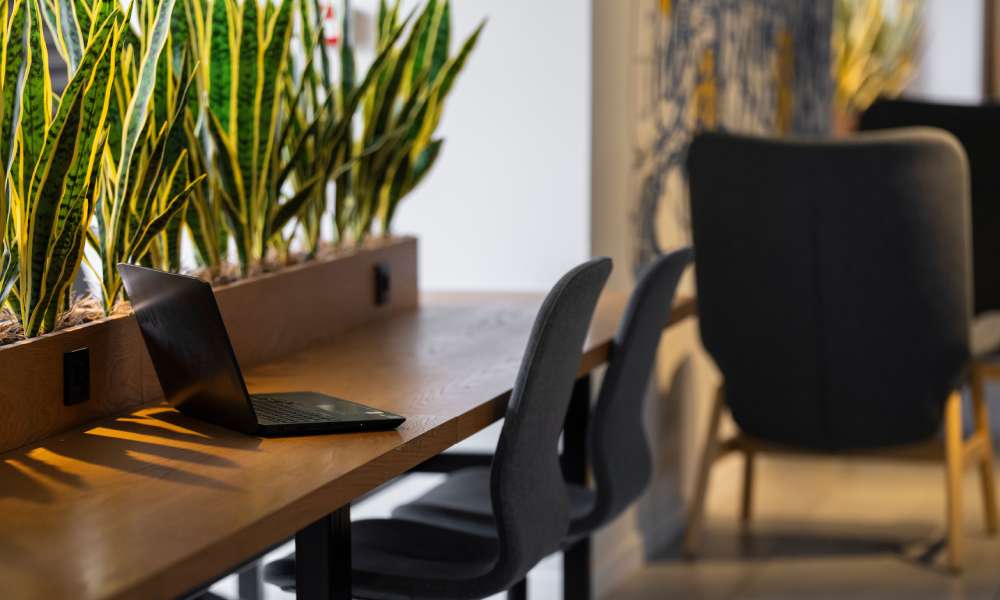
In 2026, leading workplaces are designed as adaptive ecosystems. They combine focus rooms, collaboration zones, project neighbourhoods, quiet settings, social spaces, smart booking systems, hybrid meeting technology, ergonomic work points, and biophilic elements. The objective is not to create a fashionable interior, but to create a workplace that actively supports how people work.
As more employees split time between home, client sites, co-working spaces and the office, workplaces must be intentional destinations. People need a reason to come in: access to colleagues, better tools, shared energy, learning opportunities, trusted leadership visibility and spaces that help them do their best work.
The office is not obsolete, however poorly designed, poorly managed workplaces are.
The workplace continues to play a critical role in representing the brand, building trust with clients, connecting teams and making culture visible. It also provides the infrastructure, ergonomics, acoustic control and technology needed for complex work.
But with this shift in office design and ways for employees to work, comes a new set of challenges for workplace designers and employers.
However, the new workplace brings new responsibilities. Design must now address physical comfort, mental wellbeing, psychosocial safety, acoustic distraction, digital equity, accessibility, sustainability and the risk of always-on work. In Australia, the right to disconnect and stronger expectations around psychosocial safety make these issues more than design preferences; they are leadership priorities.
Technology enables work anywhere, but it can also create fatigue, blurred boundaries and fragmented collaboration. Employers need clear hybrid policies, purposeful in-office days, reliable meeting technology and a workplace experience that supports both productivity and recovery.
Remote and hybrid work can reduce informal learning and social connection if the office is not designed as a place where people want to gather. Spaces for mentoring, team rituals, project work and informal conversation are now central to workplace strategy.
The future workplace therefore requires a balanced mix: high-quality collaboration spaces, quiet zones, individual focus settings, inclusive meeting rooms, restorative areas and flexible work points. The most successful offices are not simply agile; they are adaptive, measurable and aligned to business outcomes.
The Future of Modern Office Design
Before designing or refurbishing a workplace in 2026, organisations need a clear understanding of current work patterns, employee expectations, business objectives, technology requirements and cultural priorities. A successful workplace strategy starts with evidence, not assumptions.
The following seven areas define where workplace design is headed in 2026:
1. Strategy-Led, Data-Informed Design
Workplace design in 2026 is increasingly driven by data. Organisations are using occupancy analytics, employee surveys, booking data, utilisation studies, collaboration mapping and post-occupancy reviews to understand how space is used.
This does not mean designing only by numbers. Data should be combined with leadership priorities, employee feedback and cultural insight. The best outcomes come from asking what work needs to happen, which behaviours the workplace should encourage and which barriers the current environment creates.
Meeting room utilisation is a useful example. Employees may report that rooms are never available, while data may reveal that rooms are booked but under-occupied, meetings are too long, or small rooms are being used for individual calls. A data-led approach turns these observations into targeted design decisions.
Data also creates benchmarks. By measuring the workplace before and after change, organisations can evaluate whether the investment has improved utilisation, collaboration, employee experience, energy performance and business outcomes.
In 2026, the strongest workplace strategies are evidence-based, employee-informed and flexible enough to evolve as teams, technology and business priorities change.
Key principle: measure behaviour before design, then measure impact after occupation.
2. Hybrid-Ready Workplaces
Hybrid work is now a mature operating model. The office must support a workforce that may not be present every day but expects each visit to be worthwhile. This requires a shift from desk density to experience quality.
Activity-Based and Agile Work Settings
Activity-Based Working remains relevant, but in 2026 it needs stronger governance. Non-allocated seating, lockers and shared zones only work when supported by clear etiquette, technology, booking systems, acoustic planning and enough variety for different tasks.
The best hybrid workplaces provide a portfolio of settings: focus rooms, quiet libraries, collaboration tables, project rooms, phone booths, informal lounges, client-facing spaces and social areas. Employees choose the setting that suits the work, rather than adapting their work to a single desk.
Collaboration Spaces That Earn Their Place
Collaboration spaces are no longer limited to a few soft chairs and a screen. They need to support planned workshops, hybrid meetings, quick stand-ups, creative sessions, mentoring and informal connection. This means designing for acoustics, sightlines, digital inclusion, writable surfaces, power access and flexible furniture.
The office should make collaboration easier than it is at home. If employees commute only to sit on video calls in a noisy open plan space, the workplace has failed to provide a compelling value proposition.
Design implication: prioritise fewer, better spaces that support specific behaviours over generic areas that look flexible but perform poorly.
Open plan offices are also seeing a shift in that companies want a completely open environment where clients can see staff working and collaborating and immerse themselves in the office buzz.
Our team has also seen a greater need for furniture that is adaptable so that it can be easily reconfigured depending on the workplace requirements.
3. AI, Smart Technology and Digital Equity
Technology is now embedded in the workplace experience. In 2026, smart offices use AI-enabled systems, sensors and analytics to improve room booking, energy use, lighting, temperature, maintenance and space planning.
Hybrid meeting rooms require particular attention. Remote participants should be able to see, hear and contribute as effectively as those in the room. Good design includes camera framing, microphone coverage, screens positioned for eye contact, acoustic treatment, intuitive controls and simple room reset processes.
Technology considerations for 2026 include:
- AI-assisted room and desk booking
- Occupancy and utilisation dashboards
- Hybrid meeting rooms with inclusive audio and video
- Smart lighting and circadian lighting controls
- Air quality, temperature and energy monitoring
- Secure access systems that respect privacy and governance
- Digital wayfinding and workplace experience apps
Technology should reduce friction, not create complexity. The best systems are simple, reliable and supported by clear workplace protocols.
4. Wellbeing, Ergonomics and Psychosocial Safety
Employee wellbeing has become a core workplace design driver. In 2026, wellbeing is not limited to plants, yoga rooms or end-of-trip facilities. It includes job design, acoustic comfort, ergonomic support, psychological safety, recovery spaces, inclusive design and environments that reduce preventable stress.
Wellbeing-led workplace design should consider:
- Ergonomic work points that support varied users and workstyles
- Acoustic zoning for focus, calls and collaboration
- Access to daylight, views and biophilic elements
- High-quality ventilation and air quality monitoring
- Quiet rooms and restorative spaces
- Clear boundaries for hybrid work and after-hours contact
- Inclusive settings for neurodiverse employees and different sensory needs
In Australia, wellbeing also intersects with compliance. Employers are expected to identify and manage psychosocial hazards, while right-to-disconnect expectations reinforce the need for healthier boundaries between work and personal time.
5. Biophilic, Sustainable and Low-Impact Design
Biophilic design remains important, but in 2026 it is increasingly connected to sustainability, material health and employee experience. Natural textures, planting, daylight, fresh air, views, tactile materials and calm colour palettes can all help create workplaces that feel restorative rather than sterile.
Natural Light
Natural light remains one of the most valuable design assets. Where access is limited, lighting strategies should support visual comfort, circadian rhythm and task performance. Poor lighting, glare and screen reflections undermine both comfort and productivity.
Sustainability is also reshaping workplace fit outs. Organisations are increasingly considering embodied carbon, circular furniture choices, reuse of existing assets, low-VOC materials, energy-efficient systems and flexible layouts that extend the life of the workplace.
6. Indoor Environmental Quality
Air quality, temperature, humidity, acoustics and lighting all influence workplace performance. In 2026, these environmental factors are increasingly measured, managed and communicated to employees.
7. Culture, Brand and the Employee Experience
As offices compete with the convenience of home, they need to express what is distinctive about the organisation. Workplace design should make brand, values and culture visible through spatial planning, materials, storytelling, client experience, team rituals and the way people move through the space.
Culture cannot be solved by design alone, but design can enable it. Spaces for gathering, learning, recognition, mentoring and informal exchange are essential to maintaining connection in hybrid organisations.
Practical Design Principles for 2026
Design for purpose, not attendance. The office should support the work that benefits most from being together.
Balance collaboration with concentration. A workplace that only supports interaction will quickly become exhausting.
Make hybrid meetings equitable. Remote participants should not be second-class attendees.
In 2026, the best workplaces are adaptive, human-centred and measurable. They reflect the organisation’s brand and values, support wellbeing and inclusion, use technology intelligently and provide compelling reasons for people to come together. The future of office design is not about choosing between remote work and the office. It is about designing a connected work ecosystem where the office plays a clear, valuable and evolving role.